

Buying a single machine is easy. Buying a line that holds its rated throughput from frozen block to finished product is harder, because every stage feeds the next and the slowest one sets the pace.
We wrote this guide for procurement managers and plant engineers who are planning, upgrading or custom-building a line. It follows the order material moves through the plant, and it uses the ratings of the machines we build to show where lines usually go wrong.
1. What Counts as Value-Added Meat Processing Equipment
Primary breakdown reduces a carcass or a frozen block to bulk material: splitting, boning, trimming, breaking blocks into handleable pieces. Value-added processing starts after that. It changes the form of the meat, or the price per kilogram you can sell it at.
In practice, these outputs qualify:
- portioned steaks and cuts from fresh meat
- pure fish meat separated from bones, for surimi, fish balls and fish fillings
- ground meat at a controlled particle size
- hydrolysed raw material made from offal and poultry by-products
- dried meat slices and baked meat chips for pet treats
Value-added meat processing equipment covers both human-food and pet-food routes. The same frozen block, fresh cut, fish or offal can end up in either, and the machines that portion, separate and grind them overlap heavily.
We have designed and built standalone machines and full turnkey lines since 2004 from our base in Zhucheng, Shandong. Our customers are medium to large manufacturers, and our equipment is 304 stainless steel with CE and FDA certification.
One machine does not make a value-added operation. You get that from the sequence, and the next section lays it out.
2. Map the Process Flow Before You Choose Machines
A value-added line runs in one direction, and each machine’s output is the next machine’s input:
- Raw input: frozen blocks, fresh cuts, fish or offal
- Preprocessing: breaking down frozen material into workable pieces
- Cutting or portioning
- Grinding
- The value-adding step: hydrolysis, drying, baking or separating
Not every product uses every stage. A steak line skips grinding, and a surimi line starts with fish separation. But you should draw your own version of this flow before you request a quote, because stage ratings only make sense against it.
Preprocessing Frozen Raw Material First
Frozen material is where most lines begin. Our Frozen Meat Preprocessing Connected Production Line is a fully automated integrated system for bulk frozen meat and frozen bone-meat raw materials, rated at 5000-8000kg/h. It is the entry stage, and it sets the upper limit on what everything downstream can receive. If you are sizing the dicing and cutting steps that follow, our spec checklist for frozen meat dicing covers what to confirm.
Matching Stage Capacity to Line Throughput
Here is the worked case. The preprocessing line delivers 5000-8000kg/h. A 32 Type Meat Grinder Double Knife Triple Plate is rated at 800-1200kg/h. One grinder cannot take the full output of the preprocessing stage, and the grinder becomes the bottleneck the moment the two are connected.
You have two ways to fix it. Either you run parallel grinders, which at those ratings means roughly five to ten units to absorb the full flow, or you match the feed rate so the preprocessing stage only supplies what the grinder can take. A third option applies when only part of the output is ground at all: the rest goes to cutting or portioning instead.
Rated capacity is a ceiling, not a promise for every raw material. Tell us your real target throughput, because a line is sized to its slowest stage and not to its fastest.
3. Cutting, Portioning and Separating Fresh Meat and Fish
Fresh cuts need a different stage than frozen blocks. The Automatic Meat Steak Cutter is our portioning stage for them. It uses a full food-grade SUS304 integrated structure with an internal sealed design, so residue has nowhere to collect, and it carries a triple safety protection system with a humanized clamping structure.
For a buyer, those details matter on the cleaning schedule and the safety audit, not just on the spec sheet. A sealed body is faster to wash down, and fewer exposed gaps mean fewer places for an inspector to find a problem.
Fish Meat Separation for Surimi and Fish Balls
Fish is a different material and needs its own stage. Our Fish Meat Separator automates fish deboning and pure fish meat extraction. It replaces the traditional manual fish scraping used for fish balls, fish fillings and fish surimi snacks.
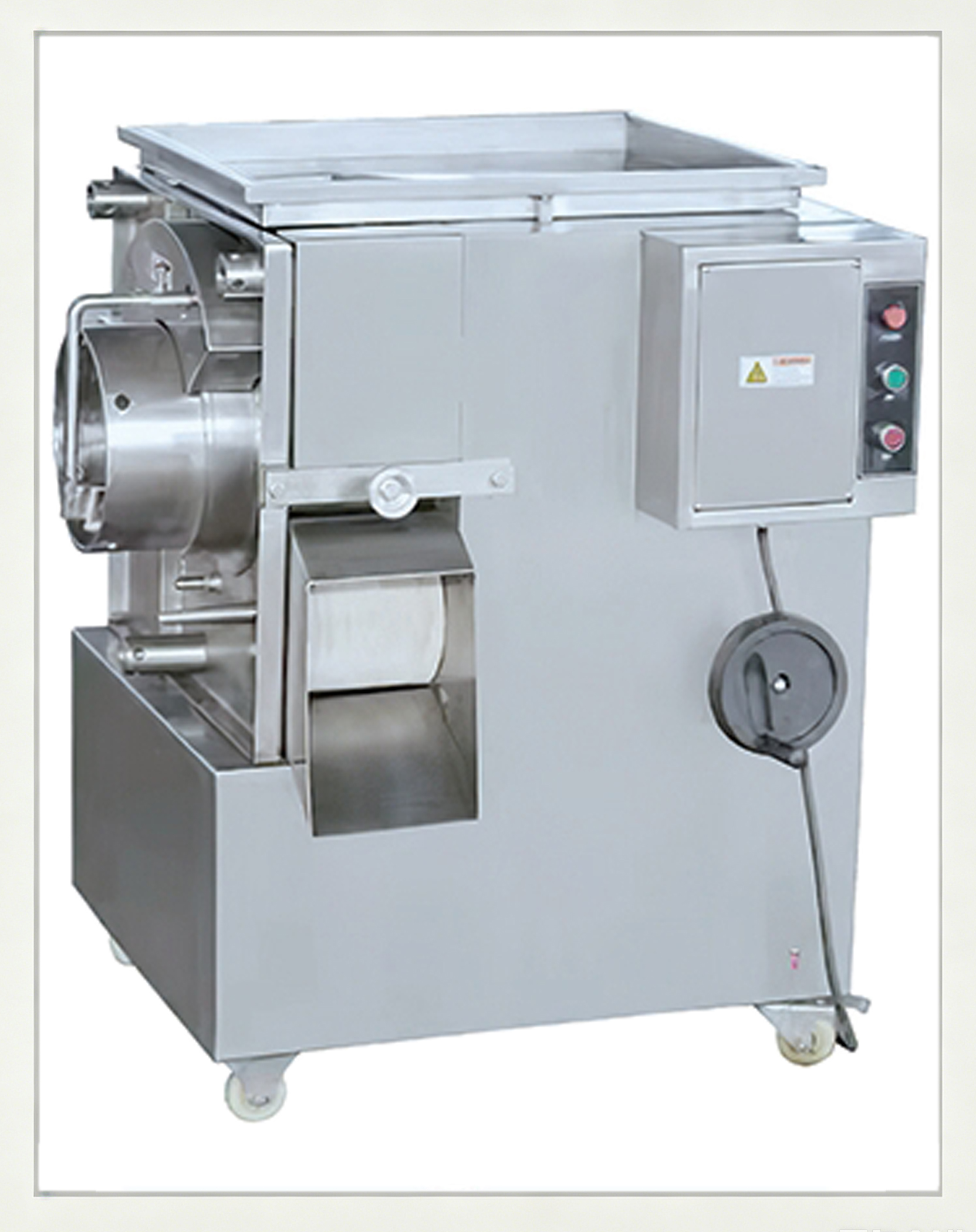
Manual scraping is slow, and it ties up a crew whose output varies from shift to shift. If you are planning a surimi or fish ball line, labor on this step is probably the first cost you want to remove. The separator does not cut portions or grind, so it sits at the front of a fish line and hands pure fish meat on to the stages after it.
4. Grinding Meat to a Consistent Input for Downstream Stages
Grinding sets the texture and particle size that every later stage has to work with. The 32 Type Meat Grinder Double Knife Triple Plate (800-1200kg/h) is our grinding stage. Its plate and knife configuration determines how fine the meat comes out, and that fineness decides how evenly the material behaves in the next machine, whether that is a hydrolysis tank, a forming step or an oven.
Inconsistent grind causes problems that show up later and cost more to trace. If you buy a grinder for the particle size your downstream stage needs, not for its throughput alone, you avoid most of them.
To place the grinder in your own layout, read where grinding fits in the line. It compares the grinder with the other cutting-and-mixing stage you might consider at the same point.
5. Enzymatic Hydrolysis for Offal and Meat Deep Processing
Some value-added steps do not change the shape of meat at all. They change what it is useful for. The Pet Enzymatic Hydrolysis Meat Production Line is our deep-processing stage for fresh meat, frozen meat, poultry and livestock offal. It turns lower-value by-products into pet food raw material.
That is the commercial case for it. Offal and trim that would otherwise sell cheaply become an input you can use in your own pet food lines or supply to others. If your plant produces a steady stream of by-products, you can see the value in that stream before you spend anything on new capacity.
Offal and Poultry as Deep-Processing Inputs
The line takes fresh meat, frozen meat, poultry and livestock offal. Those are the inputs the product is built for, and we do not claim it for anything else. Poultry and offal are the materials where deep processing pays most, because the alternative is selling them at the lowest price on the bill of materials.
6. Low-Temperature Dried Slices and Meat Chips for Pet Treats
Low-temperature drying and low-temperature baking are separate routes from freeze-drying. They use different equipment, they handle the meat differently and they produce different products. Neither of our two lines below makes freeze-dried product, so if that is your target, read freeze-drying versus low-temperature drying before you choose a method.
The deciding question is the form of the finished treat. Whole slices of fresh meat go to one line, and composite sheets go to the other.
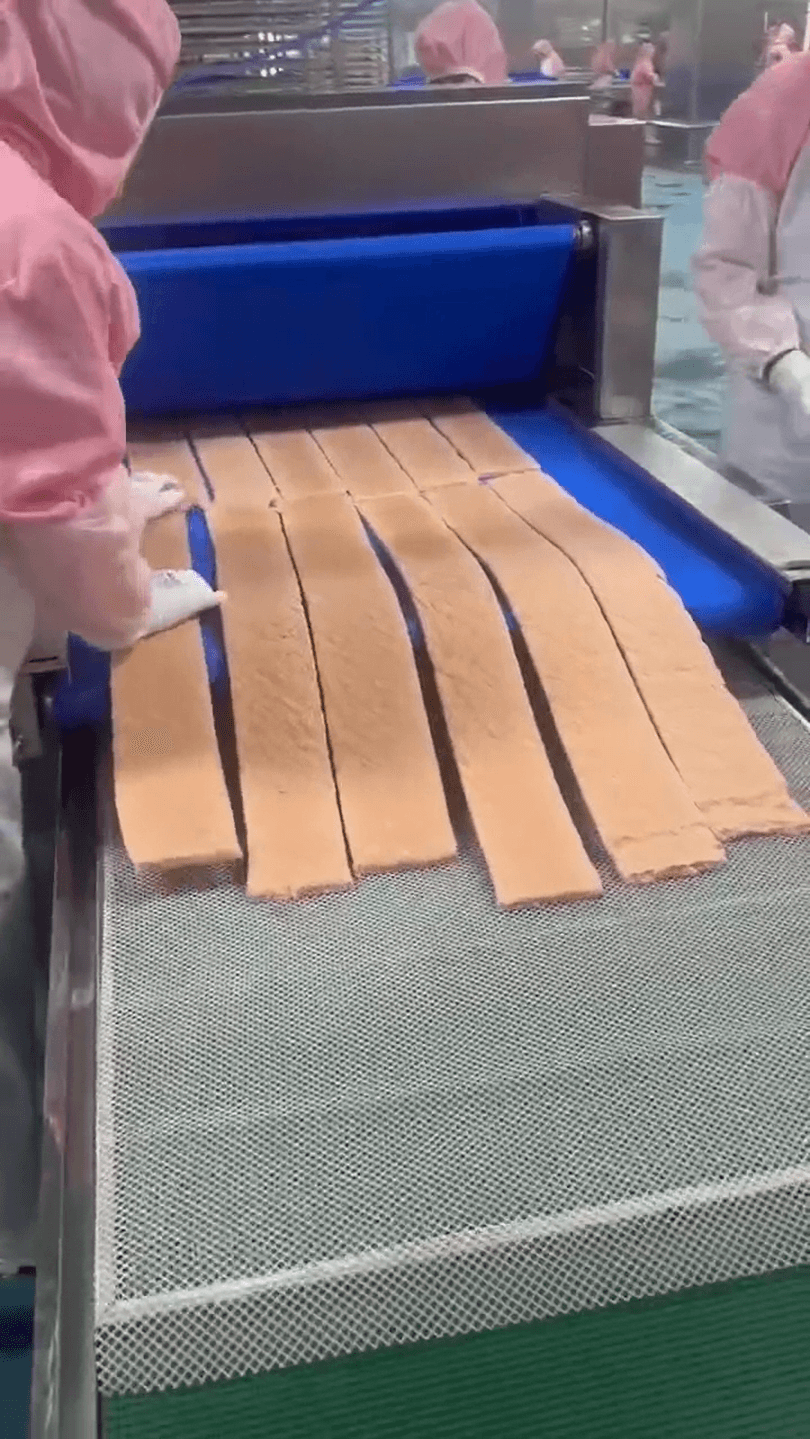
Fresh Meat Dried Slice Production Line for Pure-Meat Treats
The Fresh Meat Dried Slice Production Line (Low-Temperature Dried Meat Pet Treats) is a complete set of automatic processing equipment for high-end, grain-free, original-cut, pure-meat pet treats. It follows a different route from reconstituted frozen-meat processing. Choose it when the product claim is a single cut of real meat with nothing added.
Pet Meat Chip Production Line for Composite Meat Snacks
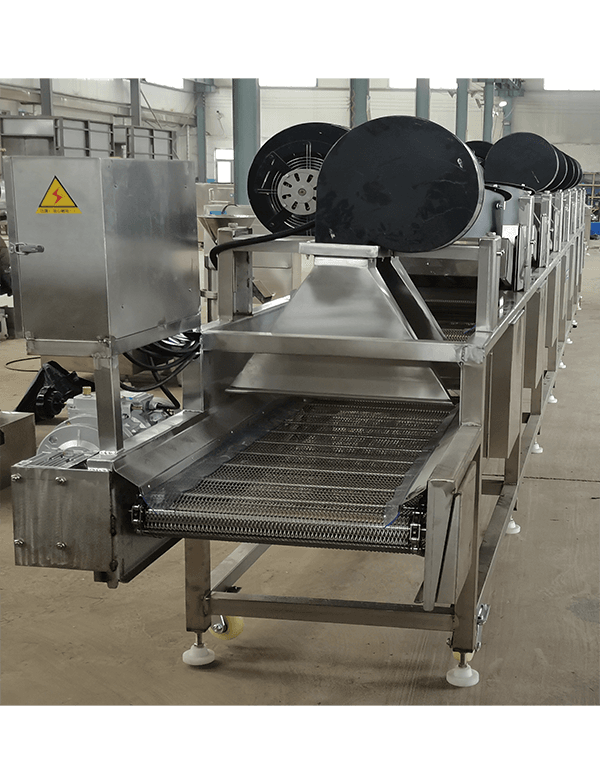
The Pet Meat Chip Production Line (Composite Meat Slice & Meat Jerky Snack) is a fully automatic set built around mature low-temperature baking technology. It is made for thin, crispy composite meat sheets and meat jerky snacks. If your recipe combines meat with other ingredients, this is the line that fits it, and the slice line is not.
7. Certification, Turnkey Integration and Commissioning
Procurement teams usually check construction and certification before they look at capacity, and they are right to. A line that cannot pass an audit does not need a throughput figure.
CE and FDA Compliance with 304 Stainless Steel Construction
All LongerFM equipment is built from 304 stainless steel and carries CE and FDA certification. Ask for the certificates that apply to the specific machines you are buying. On the Automatic Meat Steak Cutter, the full food-grade SUS304 integrated structure and internal sealed design are what make it residue-free and compliant with international food hygiene standards.
Certification covers the equipment. It does not replace your own plant’s hygiene controls, and it does not decide which market regulations apply to your finished product.
Turnkey Integration, Commissioning and Custom Capacity
A turnkey scope adds what individual machines cannot: the stages are engineered to hand over to each other at matched rates, which is the bottleneck problem from section 2 solved before the equipment ships. It also includes commissioning, operator training and custom capacity engineering, so the line is built around your daily target and not around whichever catalogue rating is closest.
The common failure with separately bought machines is that nobody owns the joins between them. In a turnkey project we do, and you deal with one supplier from layout to first production run.
To get a stage-by-stage layout, send us three things through our turnkey production line solutions page: your daily throughput target, your raw-material form (frozen block, fresh cut, fish or offal) and your target product list. Our engineers will propose the line from there.
Frequently asked questions
What is the difference between primary breakdown and value-added meat processing?
Primary breakdown reduces carcasses or frozen blocks to bulk pieces by splitting, boning and trimming. Value-added processing changes the form or unit value of that material: portioned steaks, separated fish meat, ground meat, hydrolysed offal, dried slices and meat chips.
How many grinders does a 5000-8000kg/h preprocessing line need?
The 32 Type Meat Grinder is rated at 800-1200kg/h, so full output needs roughly five to ten grinders in parallel. Alternatively, you can match the feed rate to one grinder, or send only part of the output to grinding.
Is low-temperature drying the same as freeze-drying?
No. Freeze-drying is a separate process with its own equipment. Our dried slice and meat chip lines use low-temperature drying and low-temperature baking, and neither produces freeze-dried product.
Which line suits pure-meat treats and which suits composite meat snacks?
The Fresh Meat Dried Slice Production Line suits grain-free, original-cut, pure-meat treats. The Pet Meat Chip Production Line suits thin, crispy composite meat sheets and jerky snacks.
What does a turnkey line include that separate machines do not?
It includes integration of the stages at matched capacities, commissioning, operator training and custom capacity engineering. You work with one supplier for the whole line instead of managing the connections between machines yourself.
Pingback: Turnkey Meat Processing Line Cost: Budget Ranges by Capacity - Longer Machinery
Pingback: Pet Meat Chip Production Line Supplier: Equipment Checklist - Longer Machinery
Pingback: How to Choose a Frozen Meat Preprocessing Line: Buyer Guide - Longer Machinery
Pingback: Pet Enzymatic Hydrolysis Meat Line Cost & Capacity Guide - Longer Machinery