

If you are budgeting a pet enzymatic hydrolysis meat line, the first quote you receive will probably be a single number for a tank. That number tells you little. The real cost sits in how many vessels you run, what feeds them, how they are heated and cleaned, and what they connect to downstream.
We build these lines at LongerFM, so this guide sets out how we scope them: the stages, the tank specs, the capacity maths and the cost drivers. It does not give a fixed price, because no honest price exists before we know your feedstock and output.
1. What a Pet Enzymatic Hydrolysis Meat Line Produces
The line is a deep-processing system for fresh meat, frozen meat, poultry and livestock offal. Enzymes break the protein down in a controlled tank. The output is a hydrolyzed protein slurry or liquid that palatability enhancer and hydrolyzed protein manufacturers sell on as a base for pet food palatants.
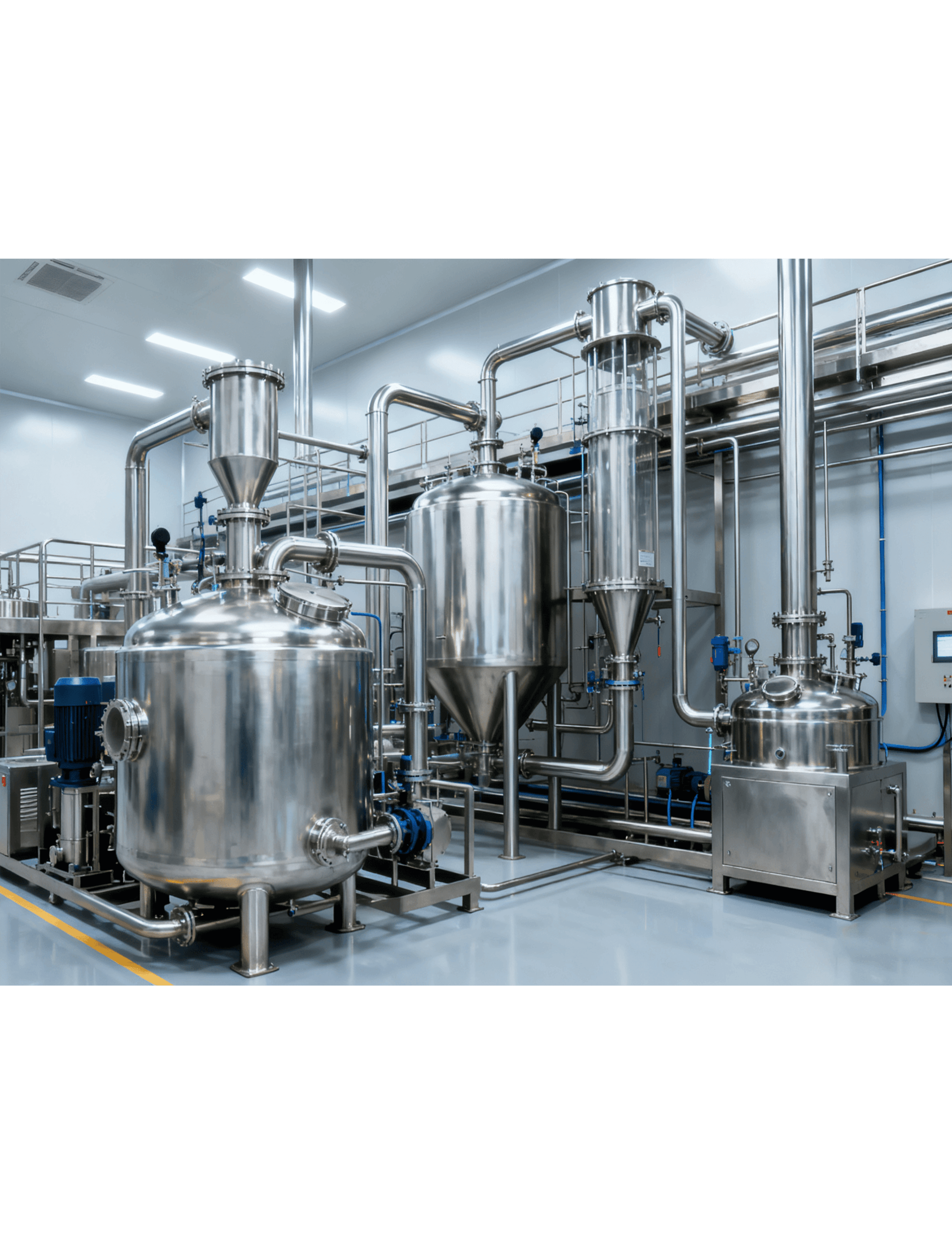
We have designed and built meat processing and pet food machinery in Zhucheng, Shandong, since 2004. Our equipment is CE and FDA certified and built with 304 stainless steel on every product-contact surface.
The line gives you a repeatable hydrolysis process and the equipment around it. It does not give you a recipe: enzyme choice, flavor profile and target degree of hydrolysis stay with your formulation team, and we size the equipment around those decisions.
2. Enzymatic Hydrolysis Equipment for Pet Food: Stages and Tank Specs
Our Pet Enzymatic Hydrolysis Meat Production Line runs in a fixed order. Each stage changes the product in a specific way, and the stage order is what you should compare when you read competing offers.
- Size reduction. Meat and offal are cut or ground so enzymes reach more surface area. Finer feedstock hydrolyzes faster and pumps more easily.
- Hydrolysis. The tank holds the slurry at the enzyme’s working temperature and pH while enzyme is dosed. Protein chains shorten and the mixture thins.
- Sterilization. Heat inactivates the enzyme to stop hydrolysis at the target point, and it reduces microbial load.
- Mixing. Flavor, antioxidant or other additives go in, so the batch becomes a finished palatant base.
- Cooling and storage. The product drops to a safe holding temperature and waits for dosing or packing.
Where fat or solids must come out, we add a separation step after hydrolysis. Not every recipe needs it, so we scope it only when your product specification calls for it.
If your feedstock arrives as bulk frozen blocks or frozen bone-meat, handle it upstream. Our Frozen Meat Preprocessing Connected Production Line is rated at 5,000–8,000 kg/h and breaks frozen stock down before it reaches size reduction, so the hydrolysis tank only sees material it can process.
2.1 Hydrolysis Tank Specs: Jacket, Agitation and pH Control
The hydrolysis tank sets batch timing for every later stage, so it deserves the most scrutiny in your specification. Ask each supplier to state these five points in writing:
- Jacket heating. The jacket must bring the batch to the enzyme’s working temperature and hold it there without hot spots. Heating medium and jacket coverage decide heat-up time.
- Agitation. The agitator keeps solids suspended and enzyme evenly distributed, because uneven mixing gives uneven hydrolysis from top to bottom of the tank.
- Temperature and pH sensing. Probes must sit where they read the real batch, not the wall. Enzymes work inside a narrow window, and drifting out of it slows the reaction or ruins the batch.
- 304 stainless contact surfaces. Every surface the product touches should be 304 stainless steel, including welds, nozzles and the agitator shaft.
- CIP coverage. Spray devices should reach the whole vessel interior, and the drain should empty it fully.
You should also ask how the tank holds pH. Hydrolysis can shift pH as it proceeds, so a tank without a way to monitor it, and correct it where your process needs correction, leaves a gap in control.
2.2 Hydrolyzed Protein Production Equipment: Mixing and Sterilization Stages
Sterilization does two jobs at once. It inactivates the enzyme so your degree of hydrolysis stops where you set it, and it reduces the microbial load before the product moves on. Because it holds the batch at temperature, it is often the stage that sets line speed.
Mixing comes after sterilization, so additives are not exposed to enzyme activity or the full heat step. A dedicated mixing tank also frees the hydrolysis tank to start its next charge. Buyers who skip the dedicated mixer save on equipment and lose throughput.
3. Pet Food Line Capacity: Batch Sizing and Cycle Time
Nameplate tank volume is the figure suppliers lead with. It is also the least useful number on its own. A large tank that spends most of its day heating, holding and cleaning produces less than a smaller tank that cycles quickly, and the slowest stage in the whole line caps what everything else can deliver.
3.1 How Working Volume and Cycle Time Set Daily Output
Daily output is working volume multiplied by batches per day. Working volume is the usable fill, not the vessel’s total capacity, since agitation and foaming need headspace.
Cycle time is where most buyers misjudge the line. One batch includes six steps: charging, heat-up, enzyme hold, sterilization, discharge and CIP. The enzyme hold is set by your recipe, but the other five are set by equipment design.
Here is how to work it out from your own inputs:
- Write down your usable fill for one batch.
- Add the time for each of the six steps, then find the longest single stage across the line, which is often sterilization or filling.
- Divide your daily running hours by that longest stage time. The result is your realistic batches per day.
- Multiply by working volume to get daily output.
If your slowest stage takes twice as long as the hydrolysis hold, the hydrolysis tank sits idle half of each cycle. Adding a second hydrolysis vessel then raises output. Enlarging the first one will not.
For a sizing method that covers wider processing lines, see our line sizing guide.
3.2 Matching Batch Size to Mixing and Storage Tanks
Batch size should match the mixing and storage tank volume. If a batch is bigger than the mixing tank, you must split it, and the split adds hold time that spoils the cycle. If it is much smaller, the mixer and storage tank run part-empty and you pay for volume you do not use.
We usually size the mixing tank to take one full batch, and the storage tank to take at least one batch plus the buffer your downstream line needs. Your downstream demand, not the hydrolysis tank, is what sets the storage volume.
4. What Enzymatic Hydrolysis Meat Line Costs by Capacity Tier
We quote in tiers because cost does not scale in a straight line with tank volume. Every tier adds equipment that has nothing to do with the hydrolysis tank.
For budget bands across whole plants, read our turnkey line budget ranges by capacity. This section stays with the drivers, which is where you can influence the price.
4.1 Three Capacity Tiers and What Changes Between Them
Single-vessel batch. One hydrolysis tank with jacket, agitator and sensing, used for trials, new product development and small runs. It has the lowest cost, but one tank does every stage in turn, so output is limited by that tank’s cycle.
Multi-vessel batch. Several vessels with dedicated mixing and storage, suited to one medium plant. Hydrolysis, sterilization and mixing run in parallel on different batches. The price rises with tank count, controls and the sanitary piping that links them.
Integrated multi-vessel layout. This is for large plants. It adds automated feed preparation, full utilities and buffer storage, so material flows from raw feedstock to finished palatant base with little manual handling. It carries the highest cost and the largest labor reduction.
This tier structure does not suit a plant that has not settled its recipe. If you are still testing enzymes and degrees of hydrolysis, start with the single-vessel tier and scale once the process is fixed.
4.2 Cost Drivers Beyond the Hydrolysis Tank
When you compare quotes, check these drivers line by line:
- Tank count and volume. More vessels buy parallel capacity.
- Controls. Basic temperature display costs less than recipe-driven automation with batch records.
- Heating utilities. Steam, hot water or another medium each needs different jackets, boilers and piping.
- Sanitary piping. Stainless transfer lines, pumps and valves add up quickly across a multi-vessel layout.
- Feed preparation. Size reduction, and any frozen stock handling upstream, can cost as much as a vessel.
- Custom engineering. Layout changes to fit your building, or integration with existing equipment, add design hours.
A quote that lists only the tank leaves most of these out, and you will meet them later as change orders.
5. Integrating Palatant Output with Wet and Dry Pet Food Lines
The output of a pet food palatant production line is only useful if the line behind it can take it. Downstream integration should be settled before anyone sizes a tank, because it fixes the specifications the output must meet.
For a wet recipe, the palatant is dosed into the mix on a line such as our Automatic Pet Wet Food Production Line, which handles cat strips, pet cans, fresh-pouch and stand-up pouches. For dry food, it is coated onto kibble after extrusion. If you are still vetting the wet line itself, our notes on how to choose a pet wet food production line cover that side.
5.1 Matching Palatant Specs to Wet and Dry Line Dosing
Agree four specifications with the downstream line, and you avoid redesigning tanks after the order is placed:
- Viscosity. The dosing pump and nozzle must handle the palatant at the range you will actually deliver.
- Temperature. Hot palatant can alter a wet recipe or a coating step, while cold palatant may thicken beyond what the pump moves.
- Pumpability. Solids content and particle size decide whether the transfer lines clog.
- Microbial limits. The limits your finished product must meet decide how hard the sterilization step has to work.
Dry-line integration is a separate cost question. Coating drums, dosing systems and the extruder itself belong to a different budget, and our guide to pet food extruder line cost drivers covers it.
6. Food Safety and Sanitation for Hydrolysis Equipment
When an auditor walks your plant, the first checks are physical. They look at what touches the product, whether the equipment drains and how it is cleaned. Hydrolysis tanks hold warm, protein-rich liquid, which is a good medium for bacteria, so sanitary design matters more here than on dry equipment.
6.1 Sanitary Design, CIP and Certification Scope
These are the features an auditor looks for first, and the features you should confirm in any offer:
- 304 stainless steel contact surfaces throughout, with smooth welds.
- Drainable vessel bottoms, so no liquid pools after discharge.
- CIP coverage on tanks and transfer lines, not just the vessels.
- Odor and vapor handling at the hydrolysis tank, because heated offal produces both.
- Separated raw and finished-product zones, so finished palatant never crosses a raw-material path.
Our equipment is CE and FDA certified. That certification supports your food-safety file, but it does not replace it. You validate the sterilization step’s microbial reduction against your own food-safety plan, using your own product and your own limits, and we supply the equipment data that goes into that validation.
7. Custom Pet Food Line Engineering Options
Every line we build is scoped to the plant it goes into. We serve medium to large manufacturers worldwide, and we offer custom line capacity engineering alongside turnkey factory solutions. These five choices change the scope most:
- Tank volume and count. These set capacity and how many batches run in parallel.
- Heating medium. Your available utilities decide jacket and boiler design.
- Automation depth. Manual valves, semi-automatic control and full recipe automation sit at very different price points.
- Feedstock handling. Fresh, frozen and bone-in material each need different preparation.
- Commissioning and operator training. We commission the line and train your operators on it.
7.1 Information to Send for a Scoped Quote
If you are a procurement manager or plant engineer ready to move from budget to scope, send us four details, and we can return a quote built around your plant rather than a catalogue figure:
- Feedstock type: fresh meat, frozen meat, poultry or offal, and whether it arrives frozen.
- Target daily output.
- Running hours per day.
- The downstream wet or dry line the palatant will feed.
You can request a scoped quote through our contact page with those four items, and our engineers will come back with the tier and the drivers that apply to you.
Frequently asked questions
Which stage usually limits the capacity of an enzymatic hydrolysis line?
It is often sterilization or filling rather than the hydrolysis tank. The slowest stage sets the batches per day for the whole line. Add up the time for charging, heat-up, enzyme hold, sterilization, discharge and CIP, and find the longest single stage before you size any tank.
Can one hydrolysis line process both frozen and fresh meat?
Yes. The line is designed for fresh meat, frozen meat, poultry and livestock offal. Frozen stock needs handling upstream first, and our Frozen Meat Preprocessing Connected Production Line is built for bulk frozen meat and frozen bone-meat.
Does CE and FDA certification mean my sterilization step is validated?
No. Our CE and FDA certified equipment supports your food-safety file, but you validate the sterilization step’s microbial reduction against your own food-safety plan. We supply the equipment data you need for that validation.
Why can’t you give a fixed price for a hydrolysis line?
Cost depends on tank count, controls, heating utilities, sanitary piping, feed preparation and custom engineering, and those vary by plant. A tank-only price leaves most of them out. Send your feedstock, daily output, running hours and downstream line, and we scope the quote from those.
Should I start with a single-vessel line or go multi-vessel?
Start with a single vessel if your recipe and enzyme choice are still being tested, because it suits trials and small runs. Move to multi-vessel with dedicated mixing and storage once the process is fixed and you need parallel batches for steady daily output.